
Currently for sale on the Worcester property market is a special listing just a few blocks away from Clark’s campus. Alongside Park Avenue between Maywood and Oliver Streets, right next to iKrave Cafe, Beaver Brook and rows of pretty three-decker houses, lies an empty parking lot. It’s on sale for $8 million, and Clark bought it just four years ago.
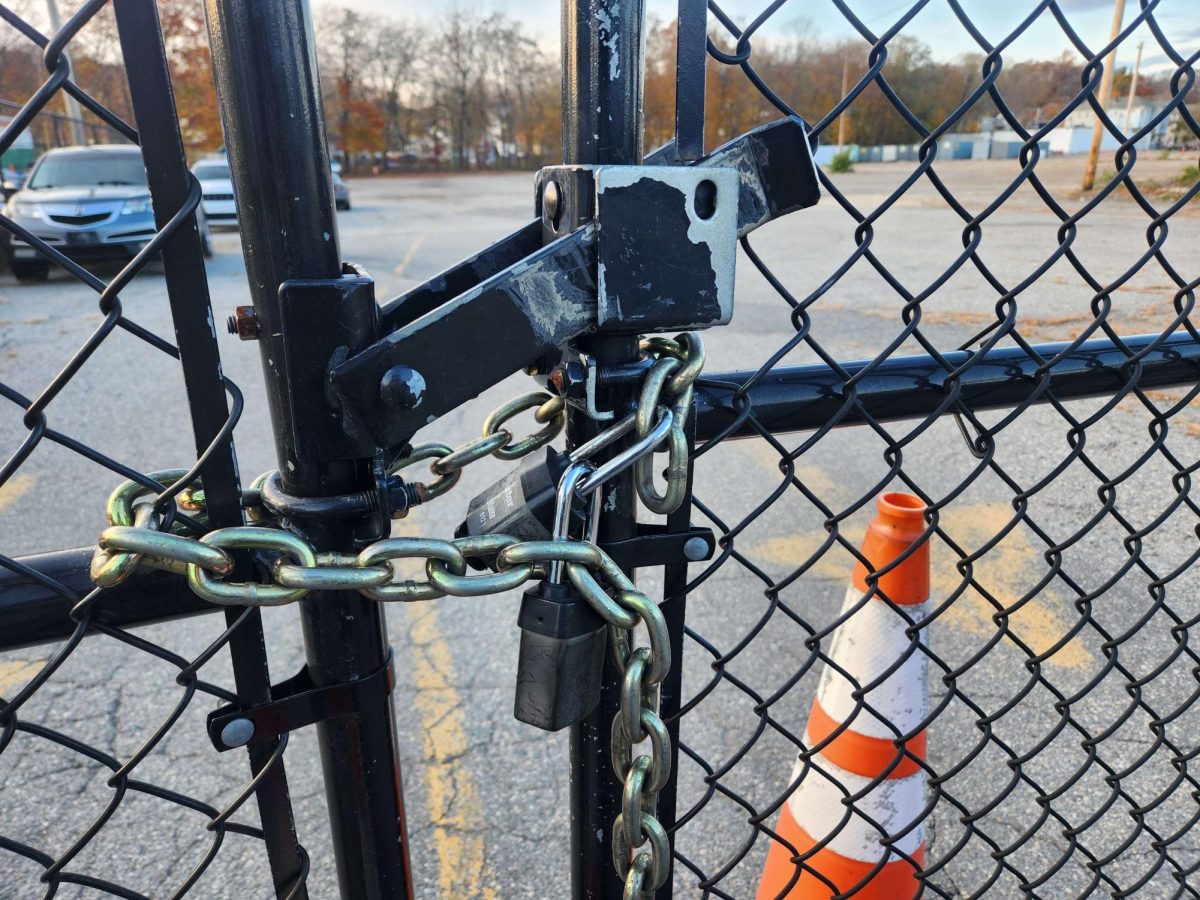
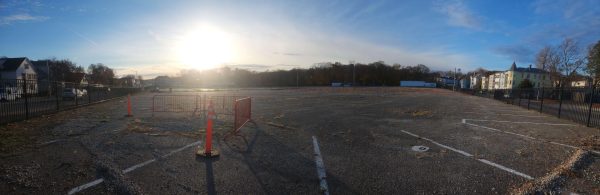
The 7.3-acre university-owned property, built in 1975 and currently assessed at $3.36 million, is really not a parking lot at all. A black fence surrounds the entire lot, with ‘No Trespassing’ signs and locked gates preventing any cars from parking there.
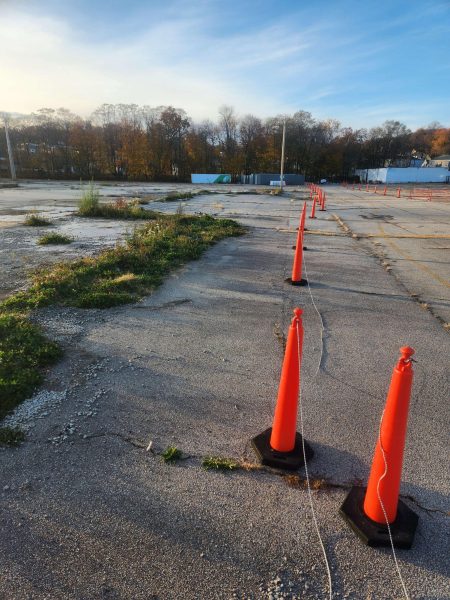
Some cars inside have their bumpers torn off, and look like they’ve been there for years. The asphalt is cracked, and weeds sprout from below as Mother Nature slowly eats up the lot. All around is an atmosphere of neglect and decay.
If one looks closely, they can find a sign still hanging aroInstitutional Dreams, One Parking Lot and the Rise and Fall of Clarkund advertising car storage rates for a company called Diamond Chevrolet.
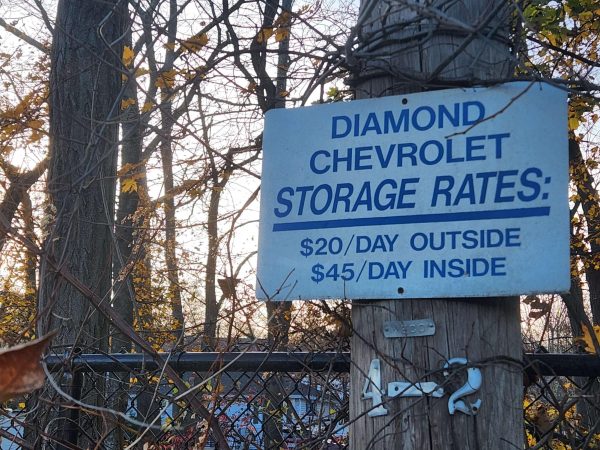
Diamond Chevrolet was a family-owned car dealership operating on the Park Avenue lot until it abandoned it in 2010, moving to Auburn because of lower taxes. Soon, the lot was hot on the market.
That is, until Clark showed up.
The Scarlet interviewed Joseph Corazzini, Clark’s Vice President for Government and Community Affairs, for this article. Corazzini, who coincidentally had worked in high school at the lot as a security guard when it was a dealership, thinks Clark President David Fithian saw something in that lot when he became president.
“What [Fithian] thought was this is the perfect opportunity to acquire some space that potentially can meet a lot of Clark’s needs,” Corazzini said. As open land, the lot was very easy to build on – and it had been on the market for ten years by that point.
Clark acquired the lot in Nov. 2021 for $6.95 million, only 16 months into Fithian’s term.
Despite this, the university was not completely sure how to use the land after buying it. “We have not yet determined a specific plan for the property,” Fithian said in a press release. He described some options as a new gym, an upgraded Student Health Services building, or even an academic or residential space.
According to Corazzini, the university also lacked the finances to build anything significant at the time.
This did not matter, though, as Clark’s future seemed very strong at the time. With recent incoming classes of 700+ students, the university was very much in a growth and expansion mindset. Its housing shortage would only get worse, having had to put graduate students in dorms at Worcester State for a couple years, and soon to be faced with forced triples. Meanwhile, many old buildings on campus were inaccessible, lacked HVAC, and had other issues.
“At the time, it made a lot of sense,” Corazzini said.
In the coming years, Clark built a fence around the lot at the request of the neighbors, and even developed a plan for the site. “We just had dreams of what it could be,” said Corazzini. An L-shaped building would lie close to the street, alongside parking and a nature path next to Beaver Brook.
Seemingly, no one at the time was considering the upcoming enrollment cliff.
In the time since, Clark’s student undergraduate population has shrunk dramatically. The demographic cliff, alongside hostile federal policies surrounding student visas, has created a “perfect storm” for the university, in Corazzini’s words—prompting a 21 percent decrease in the student body in the past two years.
According to Corazzini, administrators only started seriously discussing selling the lot within the last year. “I think the financial situation sort of made that decision for us,” he said. “Expanding Clark in that area would do so much more for the campus, but… resources have to be prioritized on the main campus at this moment.”
Considering Clark’s financial situation, then, it seems clear selling the property is the only reasonable option. “It makes it hard for Clark to, in good faith, do anything on that lot realistically within the next ten years or so,” Corazzini continued.
“I think the perspective [in Clark leadership] was that if we can’t do anything to a lot in the next decade, maybe there’s some developer who could.”
The property is currently being brokered by the real estate firm Kelleher & Sadowsky. If a sale ever goes through for the listed price of $8 million, Clark will have gained $1 million from the investment, minus brokerage fees and not accounting for inflation. However, the fact that in 2021 Clark was the first buyer in ten years is not a good sign for a university now looking to sell it.
While not explicitly a financial loss, the story of the Park Avenue lot symbolizes the story of Clark as a whole, trying to expand while increasingly facing a shrinking student body and financial strains from all sides. As the property lingers on the market, the university and Main South will continue developing their relationship.